 Cento
Black Friday: how much did you really save?
Why Black Friday discounts feel like money earned, what a consumer study found about Black Friday prices, and how a list and your receipts show what you really spent and saved.
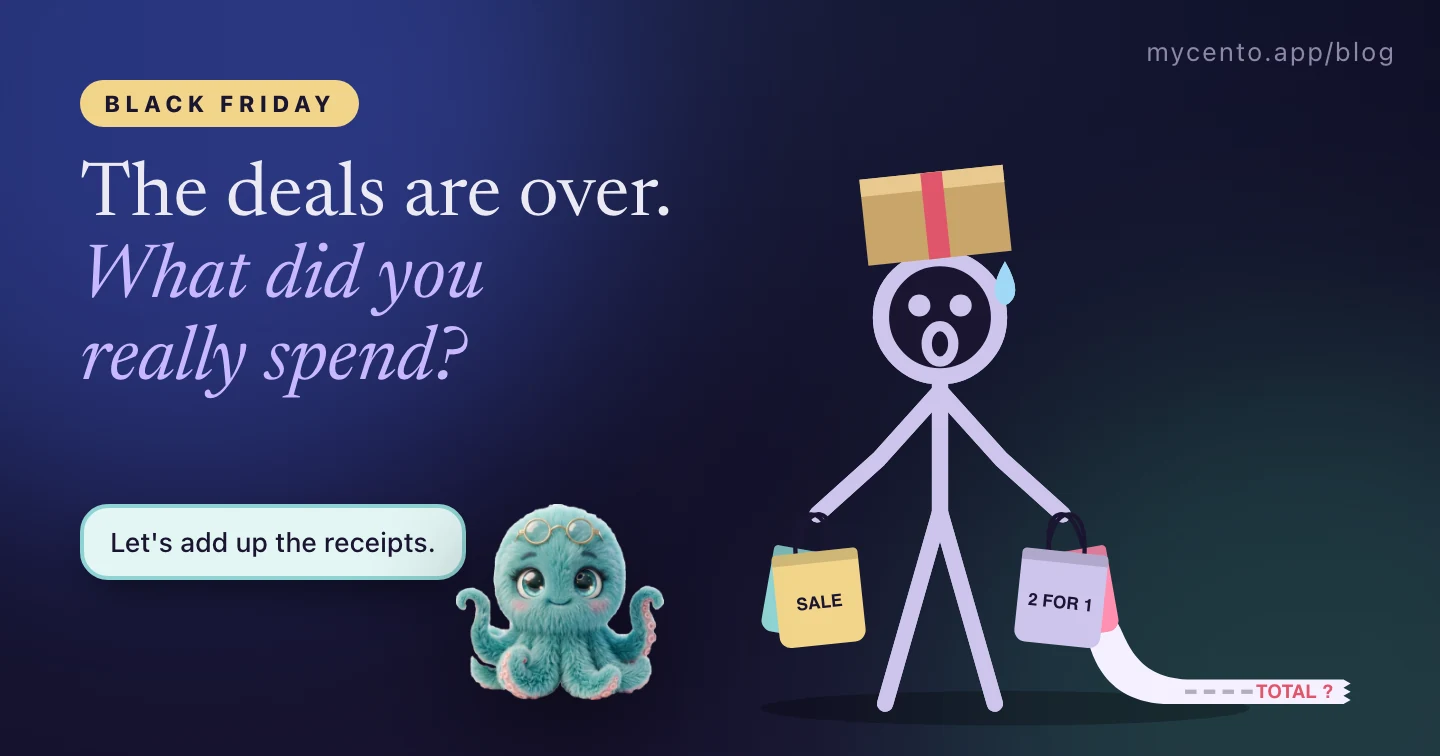
Black Friday is on November 27 this year. Every shop shows a percentage off, and after a day of sales it’s easy to feel that you saved a lot of money. In this article I explain why discounts feel this way, what a consumer study found about Black Friday prices, and how to see what you actually spent and saved.
We made a short video about it with Sam, our stick figure. Sam saves $600 on Black Friday and spends $2,340 to do it.
Why a discount feels like money earned
Richard Thaler, who later received the Nobel Prize in economics, described two parts of the value we get from a purchase. The first is what the thing itself is worth to us compared with its price. He called the second transaction utility: the pleasure of the deal itself, which comes from comparing the price we pay with the price we expected to pay.
Black Friday is built around the second part. A crossed-out price, a big percentage and a countdown make the deal feel good, even when we would never have bought the thing at its full price. The saving is real only for things we were going to buy anyway.
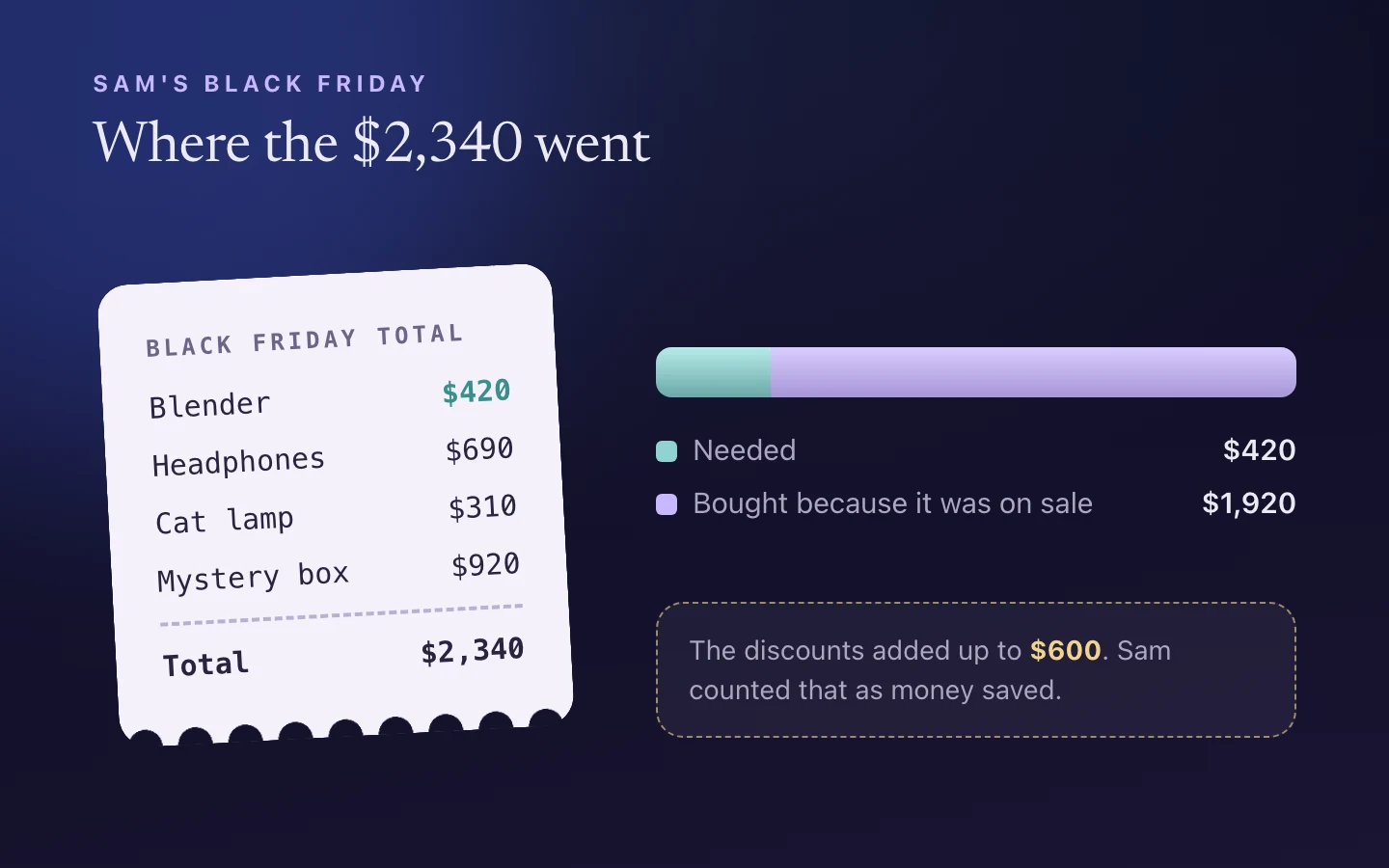
In the video, Sam’s receipts add up to $2,340. Only the blender, $420, was something Sam needed. The other $1,920 went on things bought because they were on sale. The $600 that felt like savings was measured against prices Sam was never going to pay.
The “was” price is often matched at other times
The UK consumer group Which? tracked the prices of 201 Black Friday deals at six large retailers, every day for six months before and six months after Black Friday 2020. 99.5% of the products were the same price or cheaper at some other point in the year, and 92% were the same price or cheaper in the six months before Black Friday. Only one of the 201 products was at its cheapest price on Black Friday alone.
This is one study, in UK shops that mostly sell electronics and home appliances, so the numbers won’t be the same everywhere. It does show that a Black Friday discount is often a price you could also get in another month. Checking a product’s price history before buying shows whether the deal is a real one.
Make a list before the sales
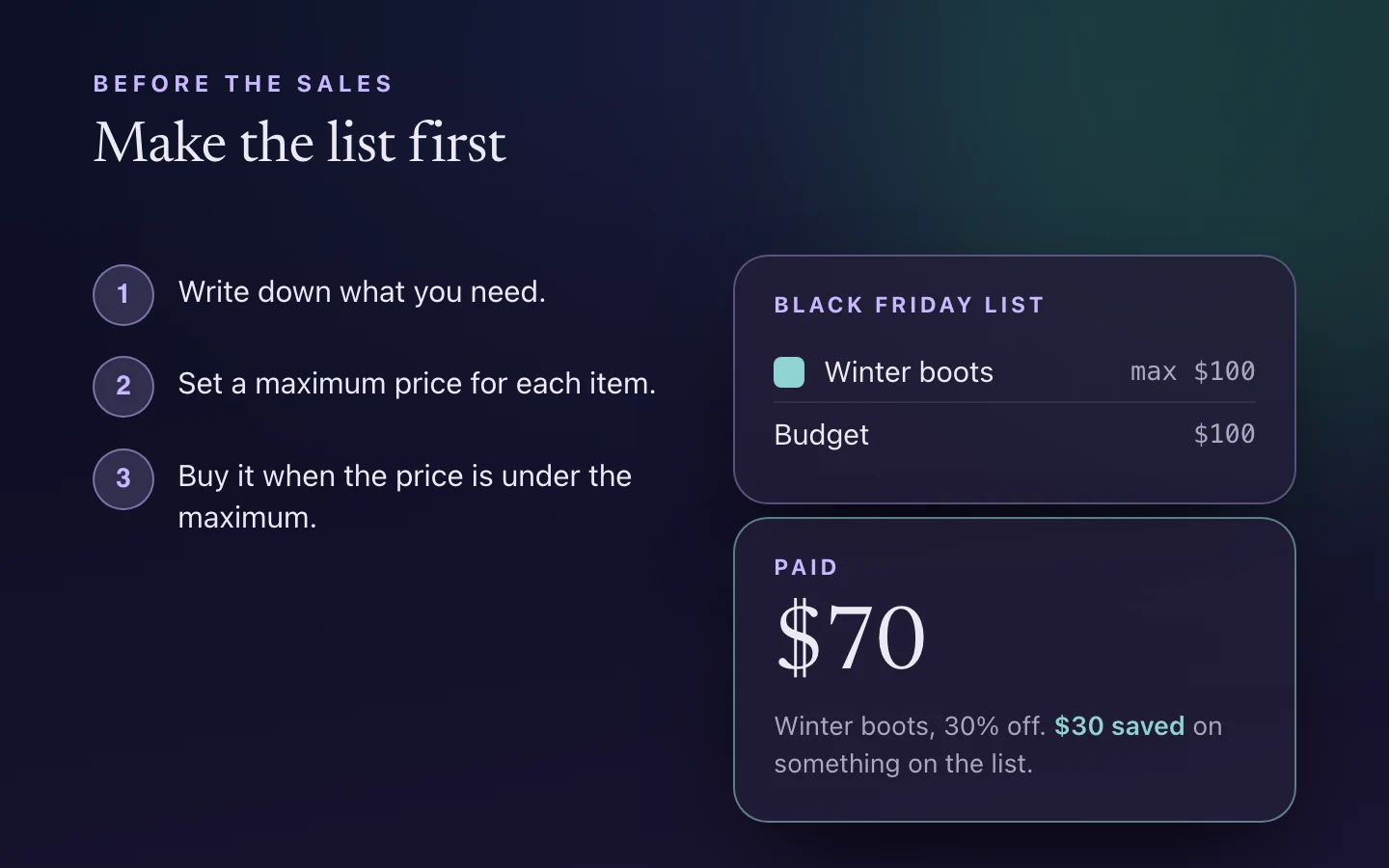
The end of the video shows a simpler way to shop on Black Friday. One year later, Sam makes a list first: winter boots, up to $100. The boots are 30% off, Sam pays $70, and the $30 saving is on something Sam needed.
A list works in three steps:
- Write down what you need before you look at any deals: things that broke, things that are worn out, and things you were already planning to buy.
- Set a maximum price for each item, the price you would pay for it at any time of year.
- Buy an item when its price is under the maximum. Anything that isn’t on the list can wait until after the sales.
A discount on something from the list is money you really keep. A discount on something you didn’t plan to buy is still money spent.
After Black Friday, add up the receipts
A week after the sales, it’s hard to say how much you spent. The receipts come from several shops, online orders arrive on different days, and each payment looks small on its own.
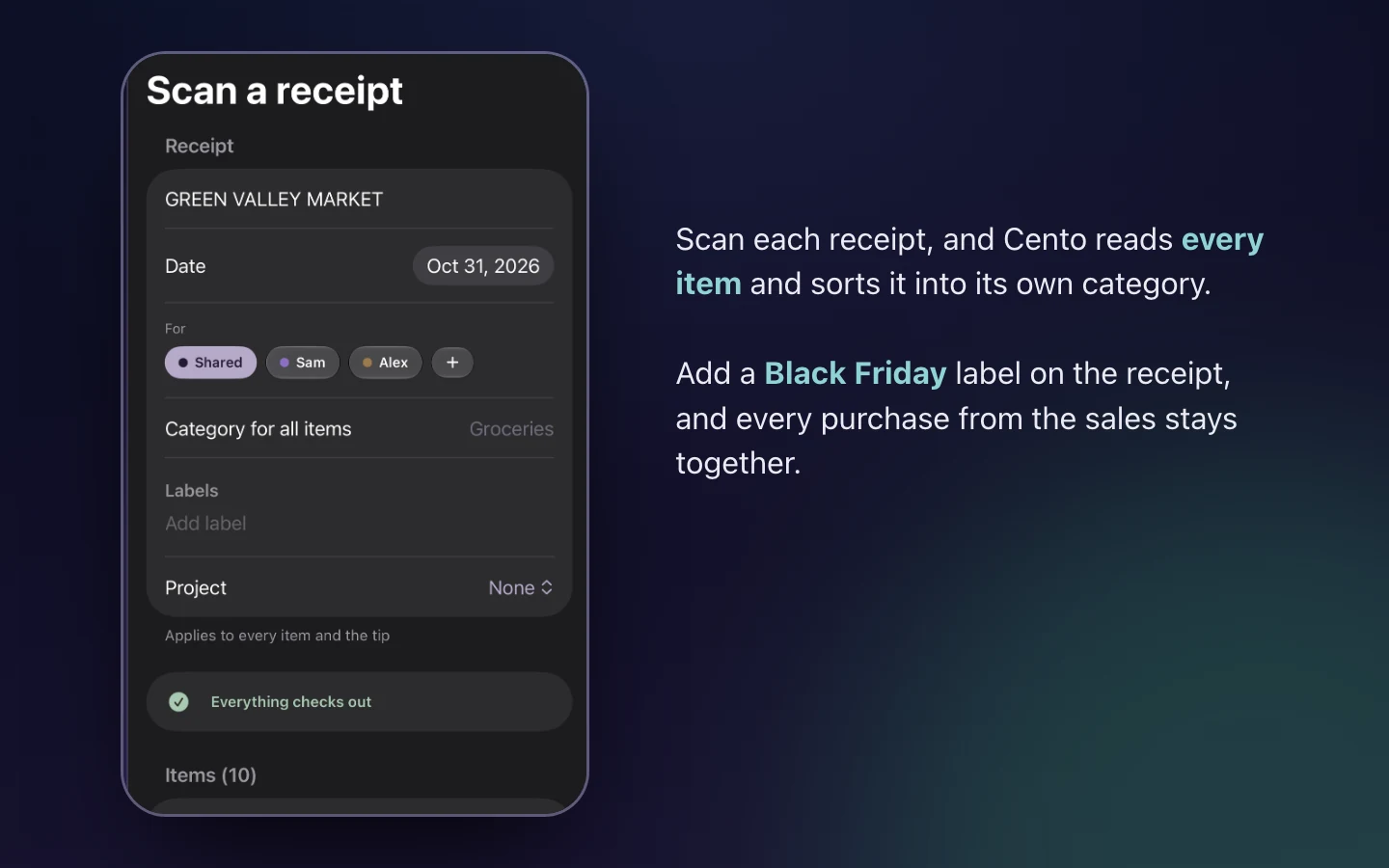
Cento adds them up for you. Scan each receipt, and Cento reads every item line by line and sorts each one into its own category, so you can see how much went on electronics, clothes or gifts. If you shopped on a site abroad, Cento detects the receipt’s currency and converts it. Add a Black Friday label on the receipt, and you can find all your Black Friday purchases together in Moments.
When you bought something from your list at a lower price, leave Invest the discount on, and the saving goes into your CresCENTO pool. I wrote about how CresCENTO works, and what small savings can become over the years, in Invest your discounts.
Sources
- Thaler, R. H. (1985). Mental accounting and consumer choice. Marketing Science, 4(3), 199-214. doi.org/10.1287/mksc.4.3.199
- Which? (2021, November 23). 99.5% of Black Friday deals cheaper or the same price at other times of the year. which.co.uk